RoboParty announces RP1 open-source humanoid, with no price or sale date
RoboParty unveiled the RP1 humanoid on 28 September 2026. It plans wider open-source releases and a mass-production programme in late 2026, but has announced no price or buying availability.
AI summary
- RoboParty unveiled the RP1 humanoid robot on 28 September 2026 at IROS.
- The company plans to publish more details about the RP1 open-source roadmap in October 2026, with additional hardware and software releases planned afterward.
Drafted by AI from this article, then checked against it.
RoboParty publicly unveiled its RP1 humanoid at IROS on 28 September 2026. The company plans broader hardware and software releases, followed by a mass-production programme later in the fourth quarter of 2026. RP1 is not currently listed for sale. The announcement gives no price or delivery date.
What changed for buyers
RoboParty’s announcement, published on 3 October 2026, introduced RP1 as a bipedal research and development platform. The intended users include researchers, educators, robotics developers and embodied AI teams.
The announcement says a mass-production programme will follow later in the fourth quarter of 2026. It does not say when buyers will be able to place an order or receive a robot. It also does not identify markets, production volumes or sales channels.
Electronics For You reported on 6 October 2026 that RoboParty plans to publish more details about the RP1 open-source roadmap during October 2026. Additional hardware and software releases are planned after that.
The open-source material will be released progressively. Humanoid.guide reported on 6 October 2026 that the announcement does not establish that RP1’s complete hardware and software stack is already available.
What the maker says
RoboParty’s 3 October 2026 announcement gives RP1 a maker-stated peak joint torque of up to 160 N·m. The robot uses the company’s Romomo actuator modules and a real-time motion-control system.
At IROS 2026, RoboParty ran a “Kick Me” demonstration. Visitors pushed and kicked RP1, after which the robot adjusted its posture and recovered its balance. Humanoid.guide said on 6 October 2026 that the available coverage provides no quantified recovery benchmark or independent performance assessment.
RoboParty says PartyOS supports the robot’s control and training systems. PartyOS incorporates UFO, an unsupervised reinforcement-learning framework intended to develop motion policies for skill transitions, disturbance recovery and fall recovery without predefined trajectories. These are maker descriptions of the framework. Published evaluation results are not provided.
The company plans to open more than mechanical design files. Its stated roadmap covers motion-control systems, simulation environments, software development kits, training tools and the PartyOS platform.
The platform behind RP1
Open Source For You reported on 6 October 2026 that RP1 builds on RoboParty’s earlier RPO, or ROBOTO ORIGIN, platform. RPO repositories include hardware files, ROS 2 deployment software, reinforcement-learning workflows, robot models, firmware, navigation tools and XR teleoperation modules.
The same report says the main RPO repository generally uses the GPLv3 licence. Individual modules and third-party components retain their own applicable licences. Licensing terms for the complete RP1 stack have not been published.
Still unconfirmed
- Price and preorder date.
- First delivery date and available markets.
- RP1 height, weight, payload, runtime and walking speed.
- Production volume for the planned fourth-quarter programme.
- The release date and licences for the complete RP1 hardware and software stack.
- Independent measurements of joint torque, balance recovery or other performance.
Sources
- Open Source For You: RoboParty Opens Full-Stack Humanoid, 6 October 2026
- Cision PR Newswire: RoboParty Unveils RP1, a High-Performance Full-Stack Open-Source Humanoid Robot at IROS, 3 October 2026
- Humanoid.guide: RoboParty unveils RP1 humanoid and open source roadmap, 6 October 2026
- Electronics For You: RoboParty RP1 Targets Open Humanoid Robotics With AI, 6 October 2026
Related coverage
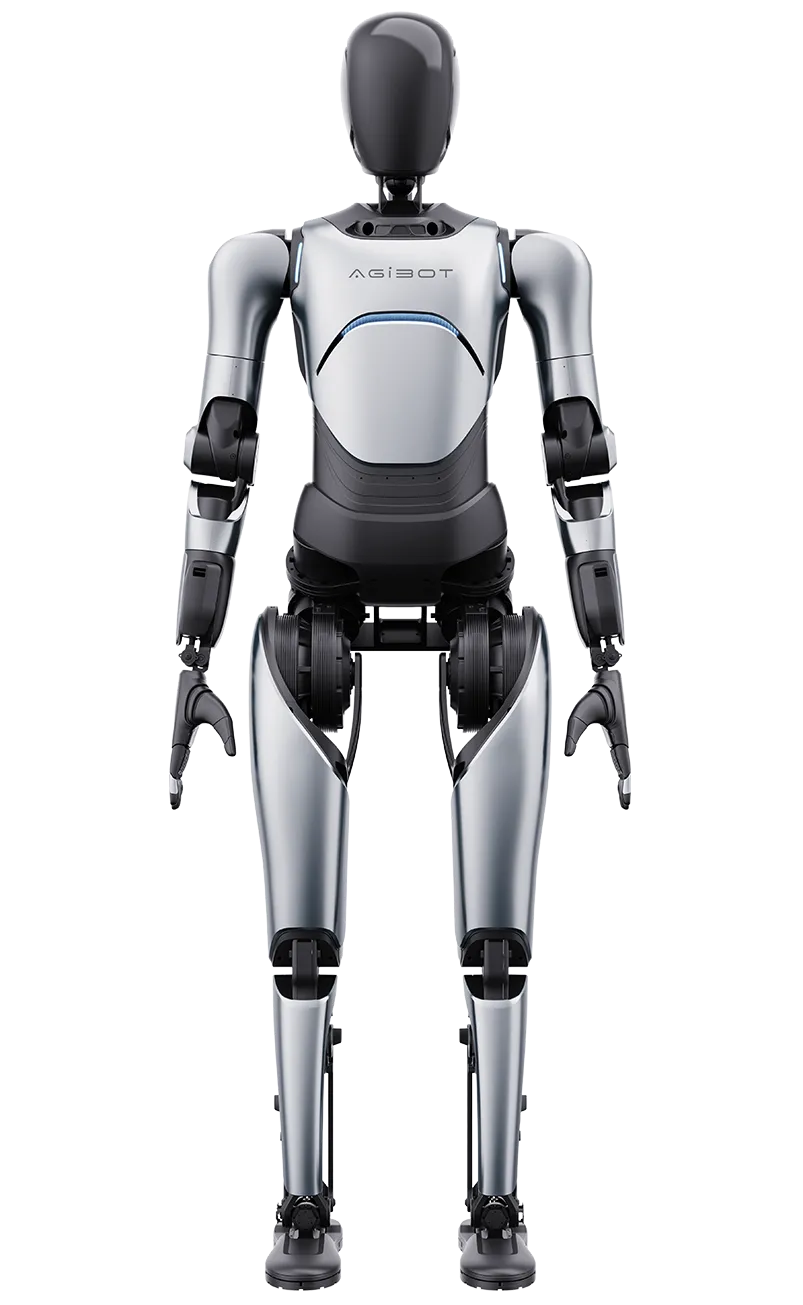
RealWorld demos object pickup from moving conveyor at Shanghai Expo
RealWorld demonstrated a humanoid robot picking objects off a moving conveyor at CIIE 2026 in Shanghai. The demo highlights progress in industrial manipulation but does not confirm a purchase option.
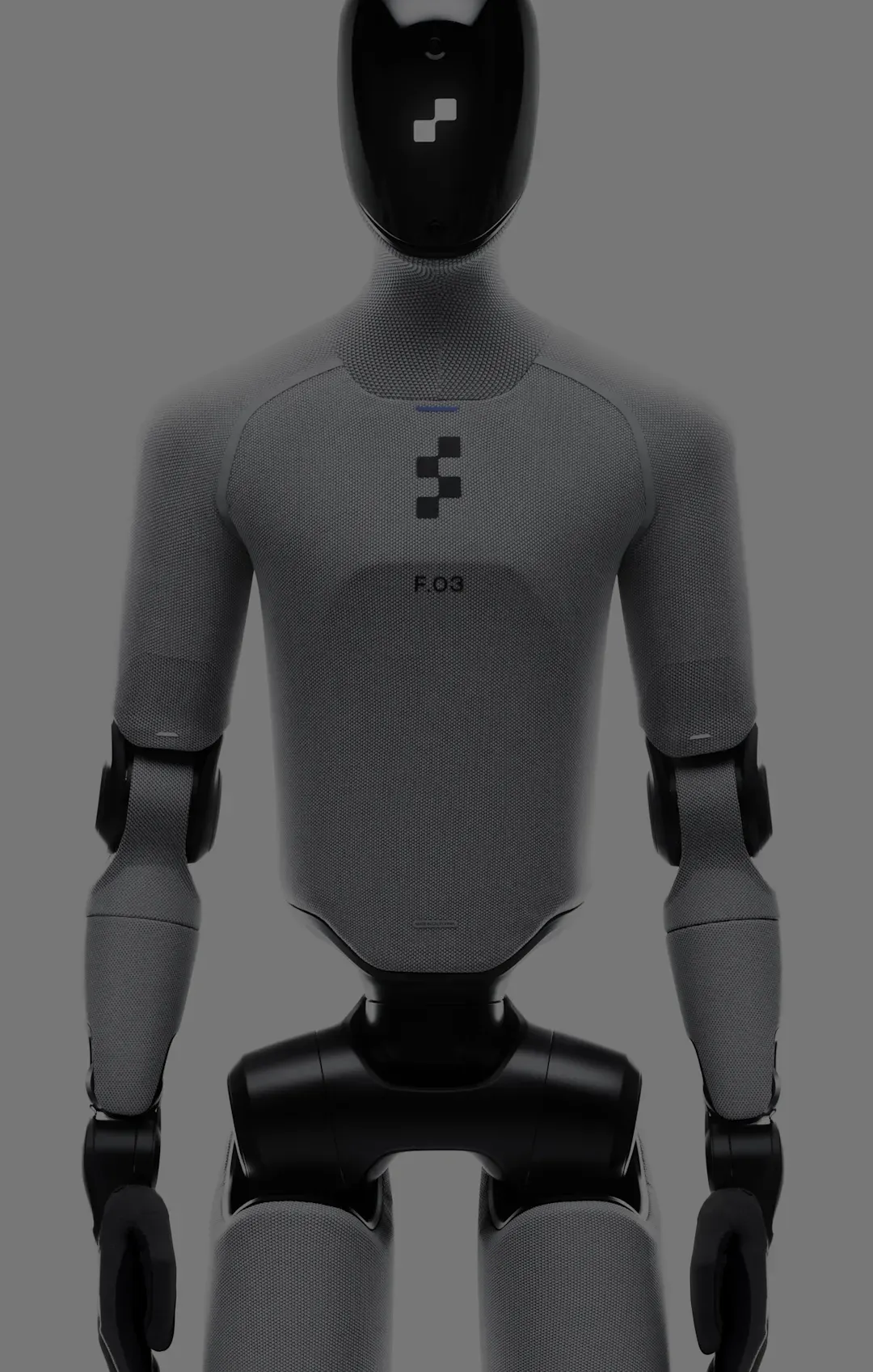
Figure 03 units are shown walking on Figure's campus after leaving the BotQ factory
Several newly completed Figure 03 robots were shown walking outdoors on Figure's campus after leaving the BotQ factory in early November 2026. The robot remains available only to business customers under private contracts.
Xiaomi CyberOne completes full 8-hour factory shift
On 3 November 2026, Xiaomi confirmed that its CyberOne humanoid robots worked a full 8-hour shift in an EV factory, validating production-line operational capabilities. The robots sorted flexible car parts autonomously, with two charging breaks included.